
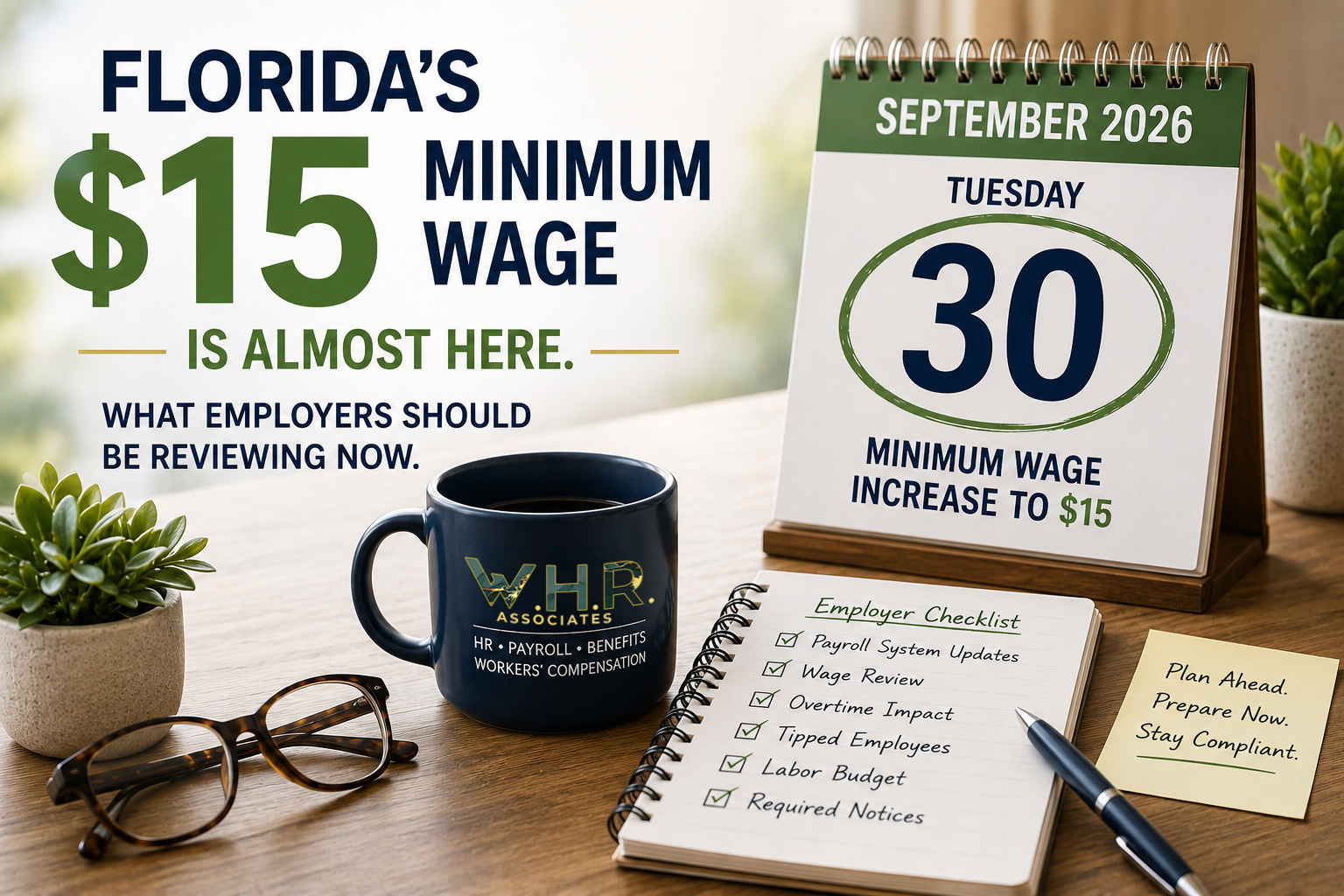
Florida businesses are approaching an important payroll milestone.
On September 30, 2026, Florida’s minimum wage is scheduled to increase from $14.00 to $15.00 per hour, completing the series of annual $1 increases approved by Florida voters in 2020.
For many employers, the obvious response may be simple: update the hourly rate for employees currently earning minimum wage.
But the real impact can reach much further.
For Florida business owners, now is a good time to look beyond that $1 increase and consider what the new minimum wage could mean for payroll, overtime, existing pay scales, labor costs, employee retention and future hiring.
It May Affect More Than Your Minimum Wage Employees
Imagine you have a new employee currently earning $14 per hour and an experienced employee earning $15.50.
When the minimum wage increases to $15, the difference between those two employees suddenly drops to just 50 cents per hour.
The experienced employee may have additional responsibilities, years of service or specialized skills. If that employee feels his or her experience is no longer reflected in their pay, the business could have an unexpected retention problem.
This is commonly referred to as wage compression, and it is one reason employers should consider reviewing their entire wage structure rather than only employees earning minimum wage.
Take Another Look at Your Labor Budget
An additional dollar per hour may not sound significant when viewed one employee at a time.
Across multiple employees, weeks and months, however, the numbers add up.
Employers should consider the potential impact on:
Regular payroll expenses
Overtime costs
Existing pay ranges
New hire starting wages
Supervisor and experienced employee compensation
Pricing and operating expenses
Future staffing decisions
Businesses with larger hourly workforces may feel the change more significantly, particularly in industries such as hospitality, retail, construction, landscaping, manufacturing and other service based businesses.
Planning ahead provides an opportunity to adjust instead of reacting after the new wage takes effect.
Don’t Forget Tipped Employees
Businesses employing tipped workers should also review their payroll procedures before September 30.
Florida permits eligible employers to apply a tip credit under applicable wage and hour rules. As Florida’s minimum wage increases, the required direct hourly wage paid to eligible tipped employees also changes.
Restaurants, hospitality businesses and other employers with tipped workers should make sure their payroll systems are configured correctly and that their practices continue to meet applicable state and federal requirements.
Payroll Systems Need to Be Ready
September 30 does not conveniently fall at the beginning of a month.
That makes preparation especially important.
Employers should confirm that payroll systems will apply the correct wage rate beginning on the effective date, including when a payroll period includes days both before and after September 30.
This is also an opportunity to review employee records, timekeeping procedures, overtime calculations and payroll classifications.
A seemingly small payroll mistake multiplied across several employees and multiple pay periods can quickly become a much larger issue.
Required Workplace Notices Matter Too
Payroll is not the only item employers should have on their checklist.
Florida employers subject to the state minimum wage requirements must display the applicable Florida minimum wage notice in a conspicuous and accessible location for employees.
When wage requirements change, employers should make sure they are displaying the current notice rather than an outdated version that has been hanging in the break room for years.
What Happens After Florida Reaches $15?
September 2026 represents another important change.
The move to $15 per hour completes Florida’s scheduled series of $1 annual increases. Beginning in 2027, Florida’s minimum wage is scheduled to return to annual adjustments based on inflation.
In other words, employers should not think of $15 as the end of minimum wage changes.Payroll compliance and labor cost planning will remain ongoing responsibilities.
The Best Time to Prepare Is Before the Payroll Changes
Florida businesses still have time to prepare for the September 30 increase.
Reviewing wage rates, payroll procedures, overtime exposure, pay scales and labor budgets now can help avoid rushed decisions later.
For many small and midsized businesses, however, staying ahead of payroll changes while also managing hiring, benefits, workers’ compensation, HR compliance and day to day operations can become another job in itself.
That is where W.H.R. Associates can help.
As a Florida based Professional Employer Organization, W.H.R. Associates works with businesses to simplify payroll, human resources, workers’ compensation, employee benefits, risk management and other employer responsibilities.
September 30 is coming. Is your payroll ready for $15?
Contact W.H.R. Associates to learn how we can help your business prepare for changing payroll and HR requirements while giving you more time to focus on running your business.