
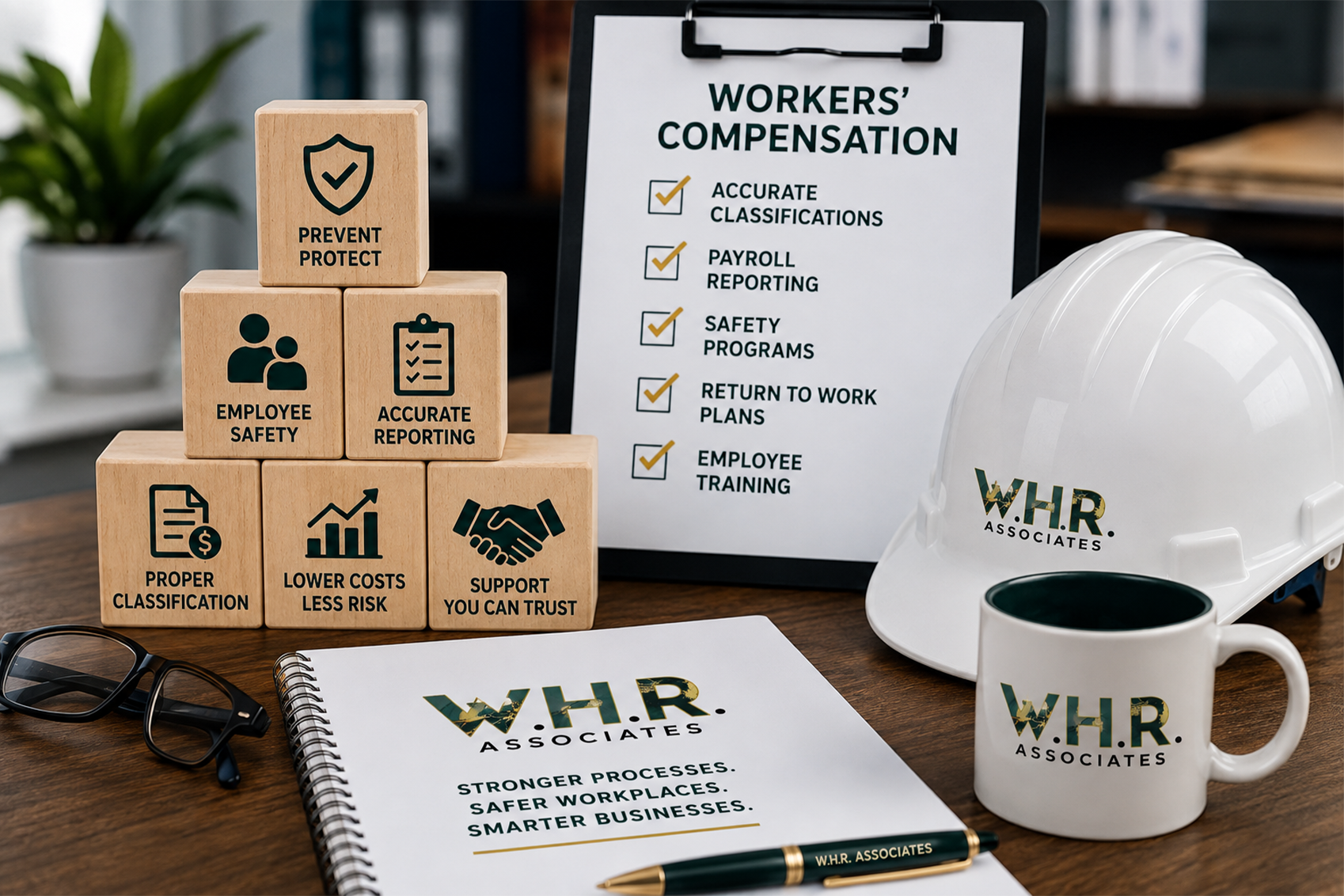
Many business owners think about workers’ compensation only after an employee gets hurt. In reality, some of the most expensive workers’ compensation mistakes happen long before an accident ever occurs.
Errors involving payroll, employee classifications, safety procedures, documentation, and injury response planning can increase costs and create unnecessary complications when a claim or audit occurs.
For Florida employers, being proactive about workers’ compensation is not simply about having coverage. It is about creating a workplace and administrative system designed to reduce risk before problems happen.
Workers’ Compensation Starts Before the First Day on the Job
A strong workers’ compensation program begins with preparation, not reaction.
Every new employee should receive appropriate safety training for their position. Job descriptions should accurately reflect the work employees actually perform, and payroll information should remain organized and current.
As businesses grow, employee responsibilities often change. Someone originally hired for an administrative position may begin helping in the field. A supervisor may start performing hands on work. A company may add new services that create different workplace risks.
When the job changes, your workers’ compensation information may need to change with it.
Waiting until an audit or claim to discover these inconsistencies can become expensive.
Incorrect Employee Classifications Can Cost Your Business
Workers’ compensation premiums are affected by the type of work employees perform and the risks associated with their jobs.
Using an incorrect classification can mean a business pays more than necessary or faces an unexpected adjustment during an audit.
Common classification issues can include:
- Office employees who also perform field work
- Supervisors who regularly work alongside crews
- Employees performing multiple types of work
- Seasonal employees assigned to an incorrect classification
- Job responsibilities that have changed without the classification being reviewed
Do not assume a classification that was correct two years ago is still correct today.
Reviewing job responsibilities regularly can help identify discrepancies before they become costly.
Payroll Accuracy Matters More Than Many Employers Realize
Payroll and workers’ compensation are closely connected.
Premiums are commonly based in part on payroll, which makes accurate reporting extremely important. When estimated payroll and actual payroll differ significantly, employers can face unexpected adjustments.
Poor recordkeeping can also make the audit process unnecessarily difficult.
Businesses should maintain accurate records throughout the year rather than trying to reconstruct information when an audit notice arrives.
Clean payroll records can mean fewer surprises at audit time.
Workplace Safety Is More Than a Compliance Requirement
A good safety program should not exist simply because someone says the business needs one.
It should become part of everyday operations.
Employees need to understand potential hazards, supervisors need to know how to address unsafe conditions, and management needs a process for documenting and correcting problems.
A proactive safety culture can help businesses:
- Reduce workplace injuries
- Identify hazards earlier
- Reduce employee downtime
- Improve productivity
- Strengthen employee confidence
- Better manage workers’ compensation claims
For businesses in industries such as construction, manufacturing, hospitality, landscaping, transportation, and healthcare, ongoing safety awareness is especially important.
Do Not Create an Injury Plan After Someone Gets Hurt
An employee is injured.
What happens next?
That is not a question management should be answering for the first time while an injured employee is waiting for help.
Every employer should have an established process for workplace injuries.
Your process should address:
- Who an employee should notify
- How quickly an incident should be reported
- Where an injured employee should receive appropriate medical care
- How the incident should be documented
- Who is responsible for completing required paperwork
- How management follows up with the employee
- How return to work options are evaluated
Having a clear procedure helps eliminate confusion during an already stressful situation.
Return to Work Planning Should Start Before You Need It
A return to work program can be an important part of managing workers’ compensation.
When medically appropriate, an injured employee may be able to return to modified or light duty work rather than remaining completely away from the workplace.
That can benefit both the employee and the employer.
The employee remains connected to the workplace while the business may reduce lost productivity and better manage the overall impact of a claim.
The best time to develop a return to work process is before you have an employee who needs one.
Your Business Changes. Your Workers’ Compensation Program Should Too.
Businesses rarely remain exactly the same.
You hire employees. You lose employees. You add equipment. You expand services. Managers change. Employees take on new responsibilities. You may even open another location.
Your workers’ compensation strategy needs to evolve along with your business.
Consider reviewing these questions regularly:
- Have employee duties changed?
- Are payroll estimates still accurate?
- Are classifications appropriate?
- Are safety procedures being followed?
- Are supervisors trained to handle injury reporting?
- Are workplace policies current?
- Have new risks developed as the business has grown?
An annual review can uncover issues that might otherwise remain unnoticed until they become a problem.
Small Mistakes Can Become Expensive Problems
The biggest workers’ compensation risks are not always dramatic.
Sometimes they begin with an outdated job description, an incorrect classification, incomplete payroll records, missing safety documentation, or a supervisor who does not know what to do after an injury.
Individually, these may seem like small administrative details.
Together, they can create substantial risk.
The goal should not simply be managing a workers’ compensation claim well. The better strategy is building systems that help prevent unnecessary claims, complications, and costs in the first place.
How WHR Associates Helps Florida Employers
Managing workers’ compensation involves much more than maintaining an insurance policy.
It requires coordination between payroll, HR, workplace safety, employee classifications, documentation, compliance, claims management, and return to work planning.
WHR Associates helps Florida businesses manage these responsibilities while giving business owners access to experienced HR and risk management support.
From workers’ compensation and payroll to HR, workplace safety, compliance, and employee administration, WHR Associates helps employers build stronger processes designed to protect their businesses and their people.
Build a Stronger Workplace Before an Injury Happens
You cannot prevent every workplace accident.
You can make sure your business is better prepared.
Reviewing employee classifications, maintaining accurate payroll records, strengthening safety procedures, training supervisors, and establishing an injury response plan can help reduce unnecessary risk and create a safer, better organized workplace.
The smartest workers’ compensation strategy starts before there is ever a claim.
For Florida employers, being proactive today can mean fewer surprises, stronger compliance, and a healthier business tomorrow.